


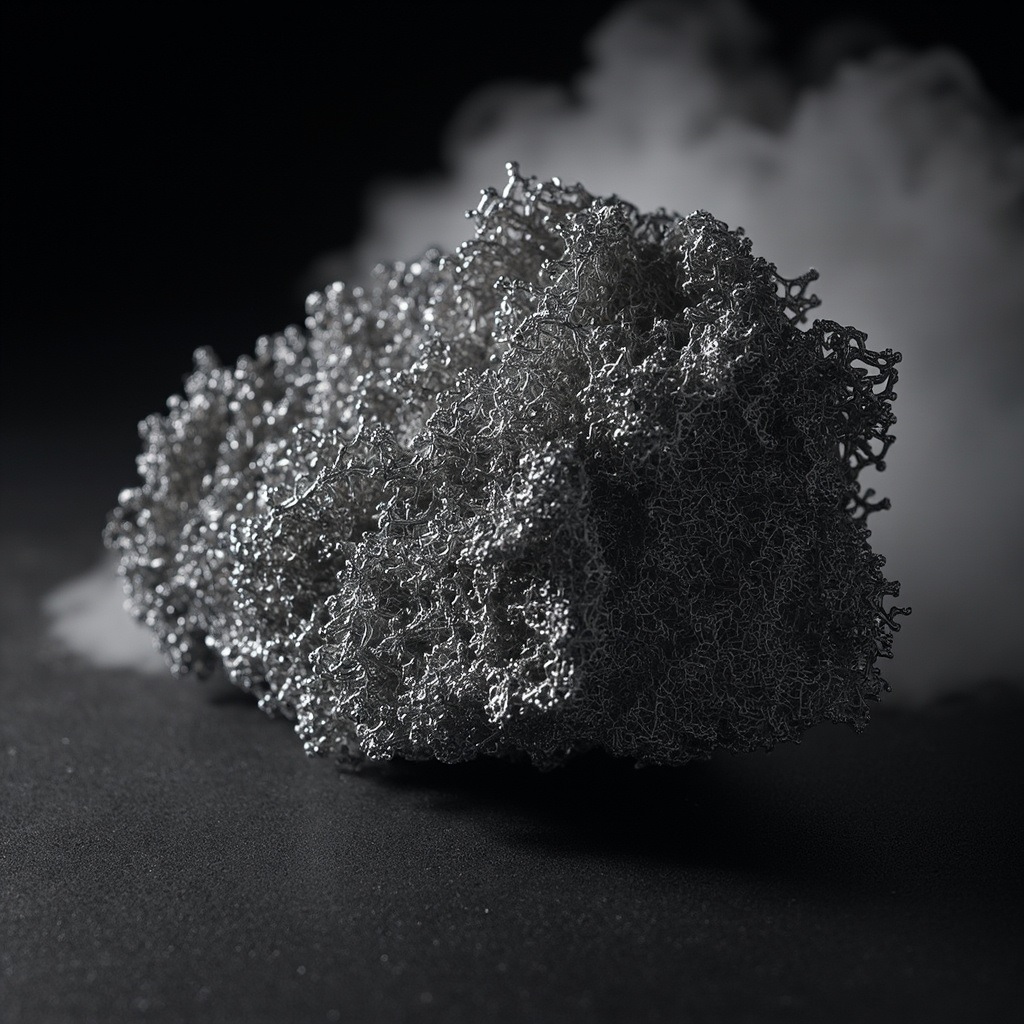
 For years, polymer processors have been fighting a quiet war against heat. You push your melt temperature higher to increase throughput, and suddenly your flame retardant decides to activate early, bloating your material into a black, useless sponge right inside the barrel. That’s not just a production delay; that’s a costly, sticky nightmare. The culprit? Standard Expandable Graphite that pops off too soon. The solution? A new breed of material engineered specifically to keep its cool when you need it most.
We’re talking about high initiation-temperature expandable graphite. This isn’t your grandfather’s graphite flake. Traditional grades typically start their dramatic expansion around 180 to 200 degrees Celsius. That’s fine for some applications, but it’s a death sentence for modern, high-shear polymer processing where your melt can easily hit 220, 250, or even 280 degrees Celsius. The result is pre-expansion, screw slippage, inconsistent part density, and a lot of scrap.
The engineering breakthrough here is surgical. By chemically modifying the intercalation compounds within the graphite layers, we’ve effectively raised the “trigger point.” These advanced grades remain dormant and stable well past the 220 degrees Celsius mark, often holding firm until 280 degrees Celsius or higher. This gives you a massive thermal safety window. You can run your extruder or injection molder at optimal speeds without babysitting the temperature profile.
Why does this matter for your bottom line? Let’s break it down. First, you get process stability. No more sudden viscosity spikes. No more erratic pressure readings at the die. The material flows predictably, which means your cycle times become faster and more reliable. Second, you get superior part quality. Because the expansion happens only when the material exits the die or mold and hits the post-processing heat source, you achieve a more uniform, dense char layer. That char is your fire shield. A delayed, controlled expansion creates a thicker, more cohesive insulating barrier than a premature, scattered one.
Think about the applications screaming for this upgrade. Polypropylene and polyamide compounds that require high processing temperatures. Wire and cable jacketing where extrusion speeds are king. Even structural foams where you need the intumescent properties but can’t afford to compromise on mechanical integrity during forming. This graphite lets you have your performance and your processability.
Let’s be blunt about the competition. Some suppliers will tell you their standard graphite is “good enough” if you just lower your processing temperature. That’s a compromise. It throttles your productivity. It forces you to run your equipment like it’s 1995. The high initiation-temperature variant is not a compromise; it’s an enabler. It unlocks faster line speeds, higher throughput, and the ability to run tougher polymer matrices that were previously incompatible with intumescent systems.
If you are still fighting char buildup on your screws or dealing with inconsistent expansion ratios, look at the root cause. It’s likely your graphite is waking up too early. Switch to a grade engineered for the heat. Your production manager will thank you when the alarms stop going off. Your quality team will thank you when the burn tests pass consistently. And your CFO will definitely thank you when the scrap rate drops through the floor.
This is not just a material substitution. It is a process optimization strategy. Stop letting your flame retardant dictate your processing parameters. Take control with graphite that knows exactly when to act.